
How we knowSupported by material, archaeological or architectural evidence.
Why it matters
Amaravati produced one of the three great schools of early Indian sculpture, with Gandhara and Mathura.
History & context
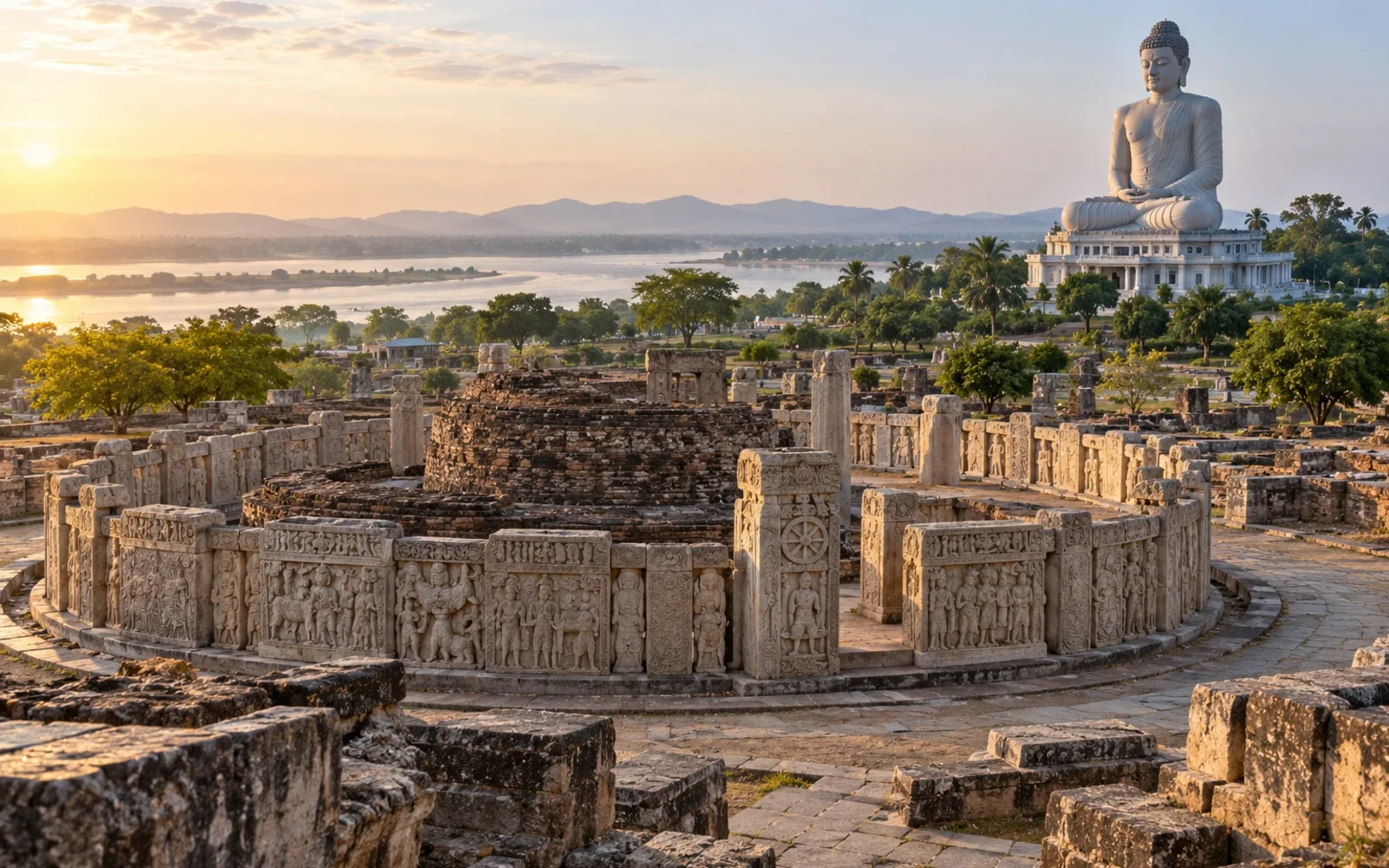
Amaravati, on the Krishna river in Andhra Pradesh, was the site of a great Buddhist stupa (Mahachaitya) begun around the third century BCE and enlarged under the Satavahana kings in the following centuries. The nearby town of Dharanikota was a regional capital. The stupa was covered with finely carved limestone slabs showing the life of the Buddha and Jataka stories. In the nineteenth century much of it was dismantled; many sculptures are now in the Government Museum, Chennai, and the British Museum, London. An archaeological museum stands at the site.
Timeline
c. 3rd century BCE
Stupa begun
1st–3rd century CE
Major Satavahana-era sculpture