
Why it matters
Kurukshetra is central to the Mahabharata and Bhagavad Gita traditions. In traditional Hindu chronology, the events of the Mahabharata and Krishna's dialogue with Arjuna are associated with Dvapara Yuga, giving the landscape enduring religious and cultural significance. Textual traditions and archaeological evidence illuminate different aspects of the region and are best considered side by side.
History & context
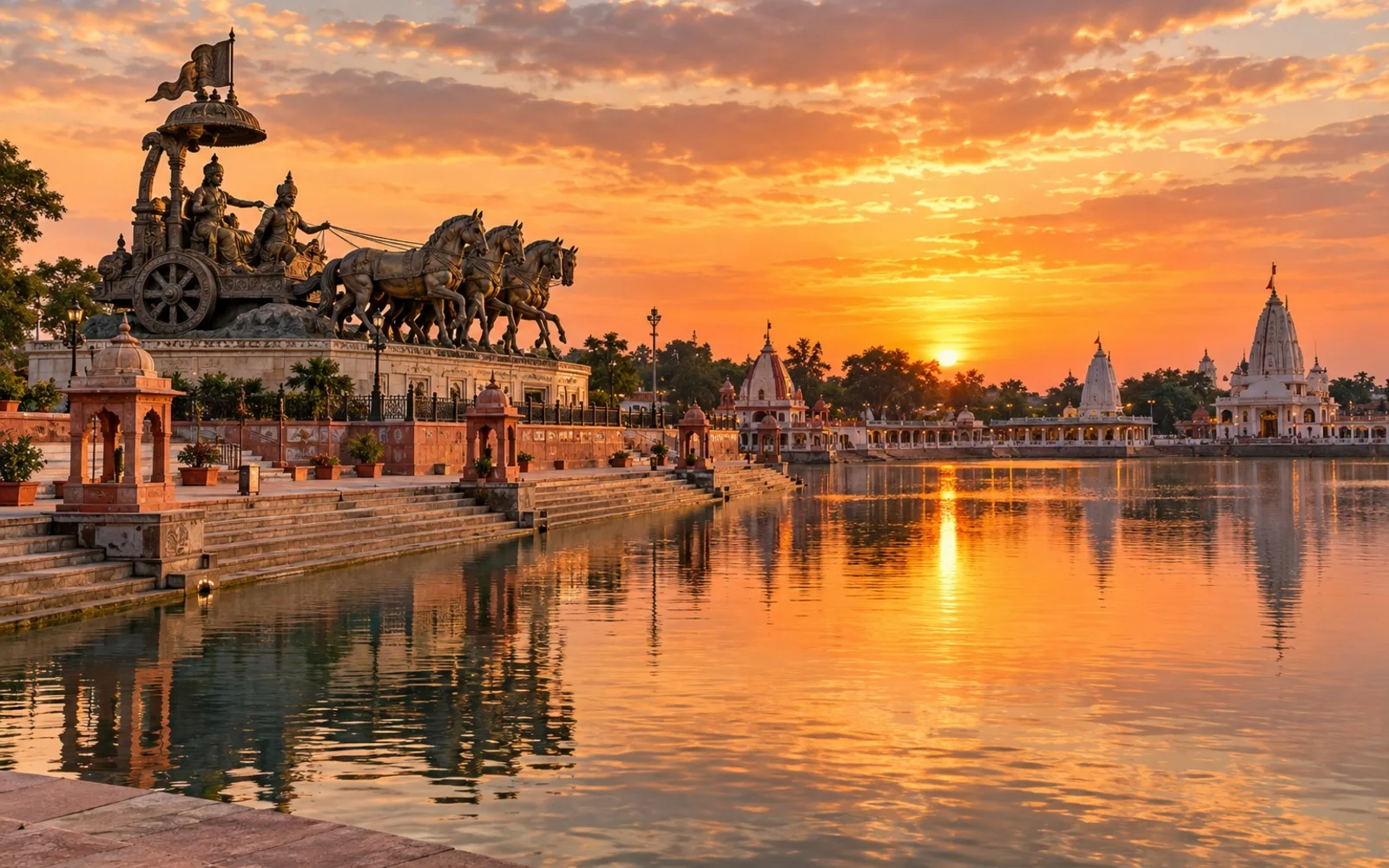
Kurukshetra, in Haryana, is described in Vedic and later Sanskrit texts as a sacred land (dharmakshetra). In the Mahabharata it is the battlefield of the war between the Kauravas and Pandavas, and the Bhagavad Gita opens with the words "dharmakshetre kurukshetre". Tradition places Krishna's teaching of the Gita at Jyotisar, beside an ancient banyan tree. Separately from the epic, archaeology shows that the region was settled early, with Painted Grey Ware sites dating to roughly the late second and early first millennium BCE, though no excavation has confirmed the epic battle. In the seventh century nearby Thanesar (Sthanvishvara) was the base of King Harshavardhana. The Brahma Sarovar tank draws large crowds during solar eclipses, and the city also has the seventeenth-century tomb of Sheikh Chilli.
Timeline
c. 1200–600 BCE
Painted Grey Ware settlements in the region
c. 4th century BCE–4th century CE
Mahabharata tradition takes shape in Sanskrit epic literature
606 CE
Harshavardhana rules from nearby Thanesar