
Why it matters
Madurai is a living temple city and a historic centre of Tamil literature and culture.
History & context
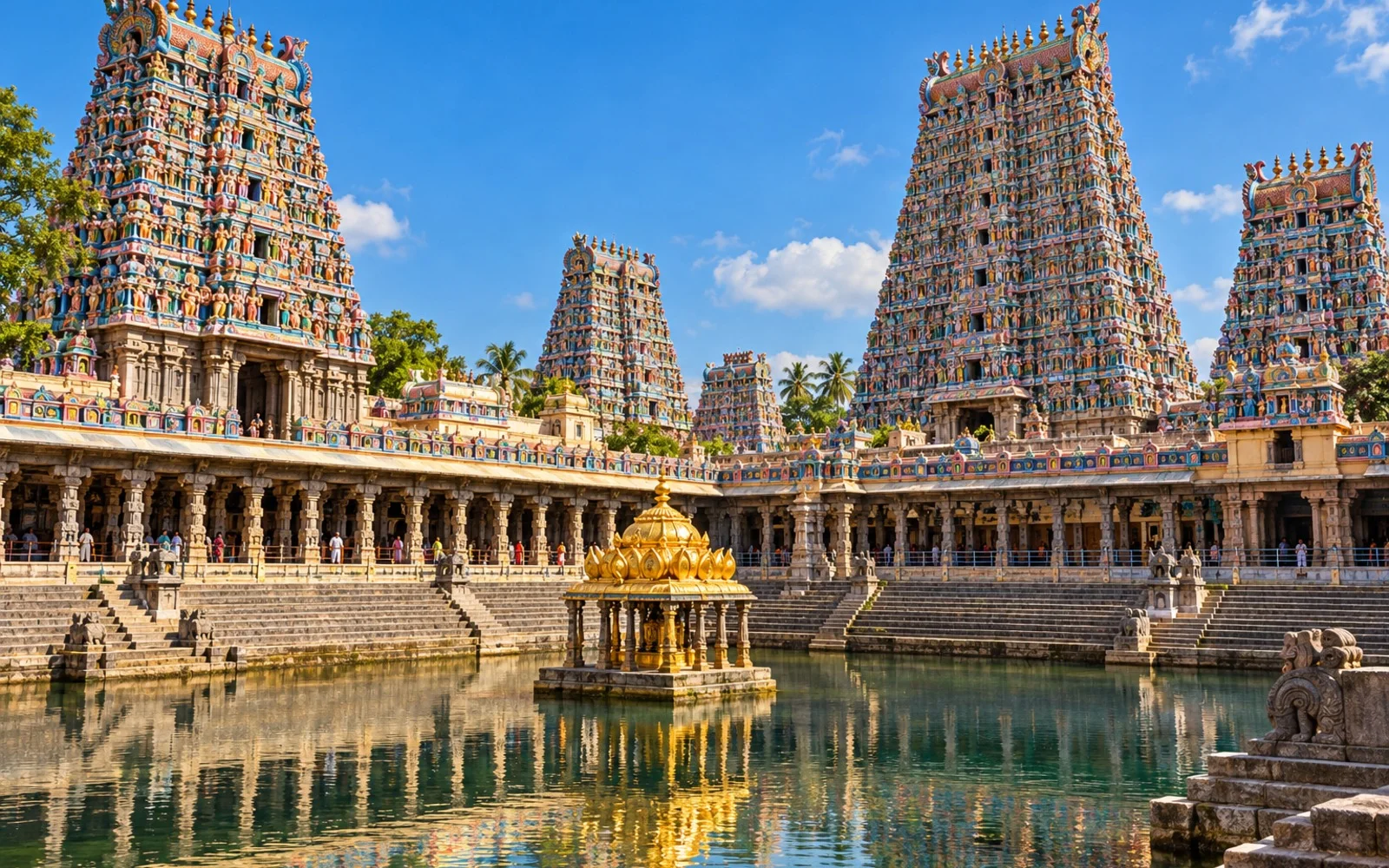
Madurai, on the Vaigai river, is one of the oldest continuously inhabited cities in South India. It was the capital of the Pandya kings and is closely tied to the early Tamil Sangam literature; Greek and Roman writers knew it as a trading centre. The city is built around the Meenakshi Sundareswarar temple, dedicated to the goddess Meenakshi and her consort Sundareswarar (Shiva). Much of what is seen today, including its towering gopurams, was built or rebuilt under the Nayaka rulers in the sixteenth and seventeenth centuries, especially Thirumalai Nayak, who also built a palace in 1636. The annual Chithirai festival re-enacts the divine marriage and draws vast crowds.
Architecture & landscape
The Meenakshi temple has fourteen gopurams, the tallest about 50 metres high, covered with brightly painted stucco figures, and a Hall of a Thousand Pillars.
Timeline
c. 3rd century BCE onward
Pandya capital in the Sangam age
1636 CE
Thirumalai Nayak Palace built