
Why it matters
Aihole shows early experiments that led to both northern and southern temple styles.
History & context
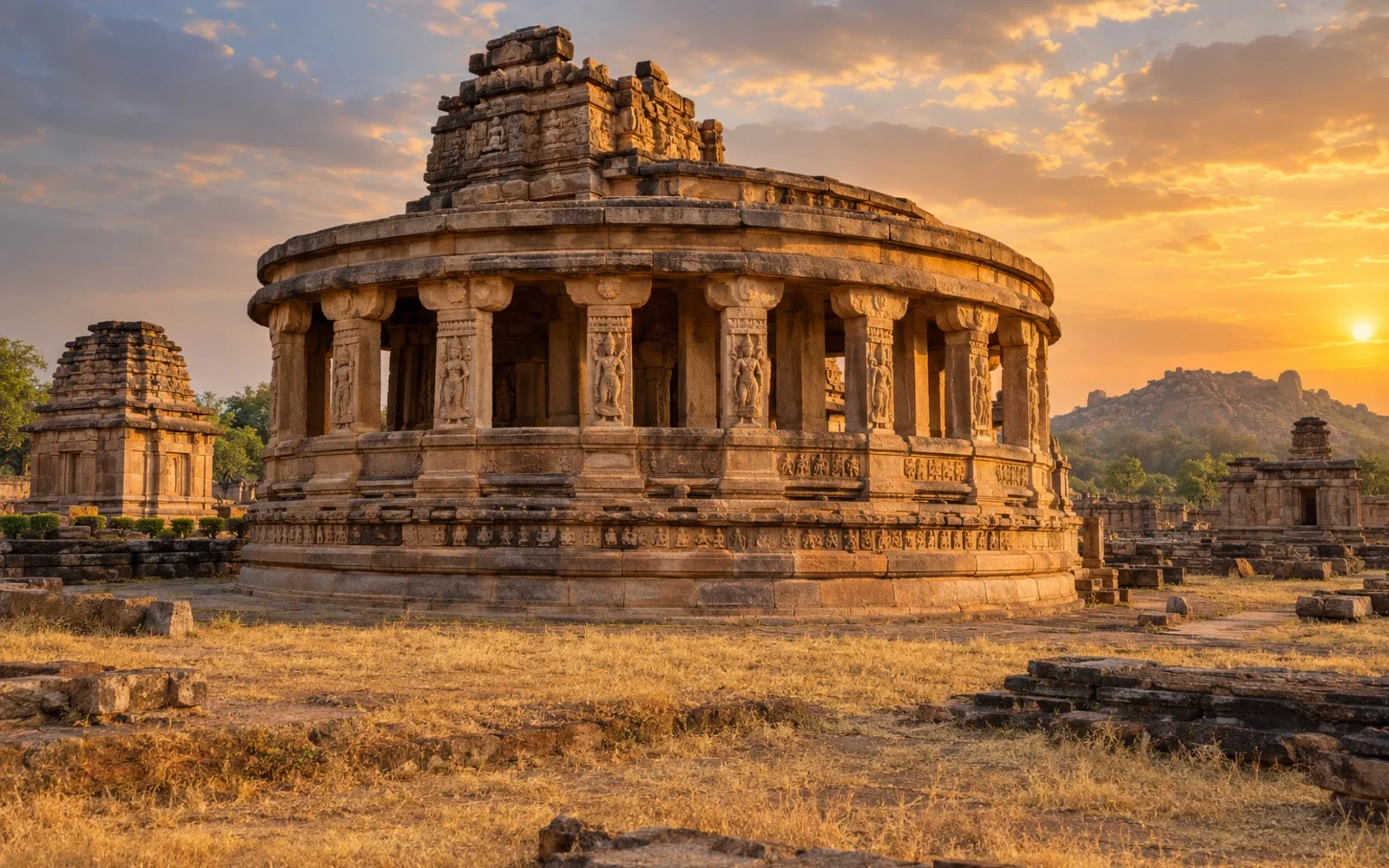
Aihole, on the Malaprabha river in Karnataka, has more than a hundred temples built mainly between the sixth and twelfth centuries. It is often described as a laboratory of early Hindu temple architecture, because builders there tried out many plans and forms. The apse-ended Durga temple, the Lad Khan temple and the Ravanaphadi cave are among its best-known monuments. The Meguti Jain temple carries the Aihole inscription of 634 CE, composed by the poet Ravikirti, which praises the Chalukya king Pulakeshin II and records his victory over Harshavardhana.
Architecture & landscape
Temples range from simple flat-roofed halls to apsidal plans and early towered shrines, many built of large sandstone blocks.
Timeline
634 CE
Aihole inscription of Pulakeshin II