
Why it matters
Champaner is a rare example of a pre-Mughal Islamic city that survives largely unchanged.
History & context
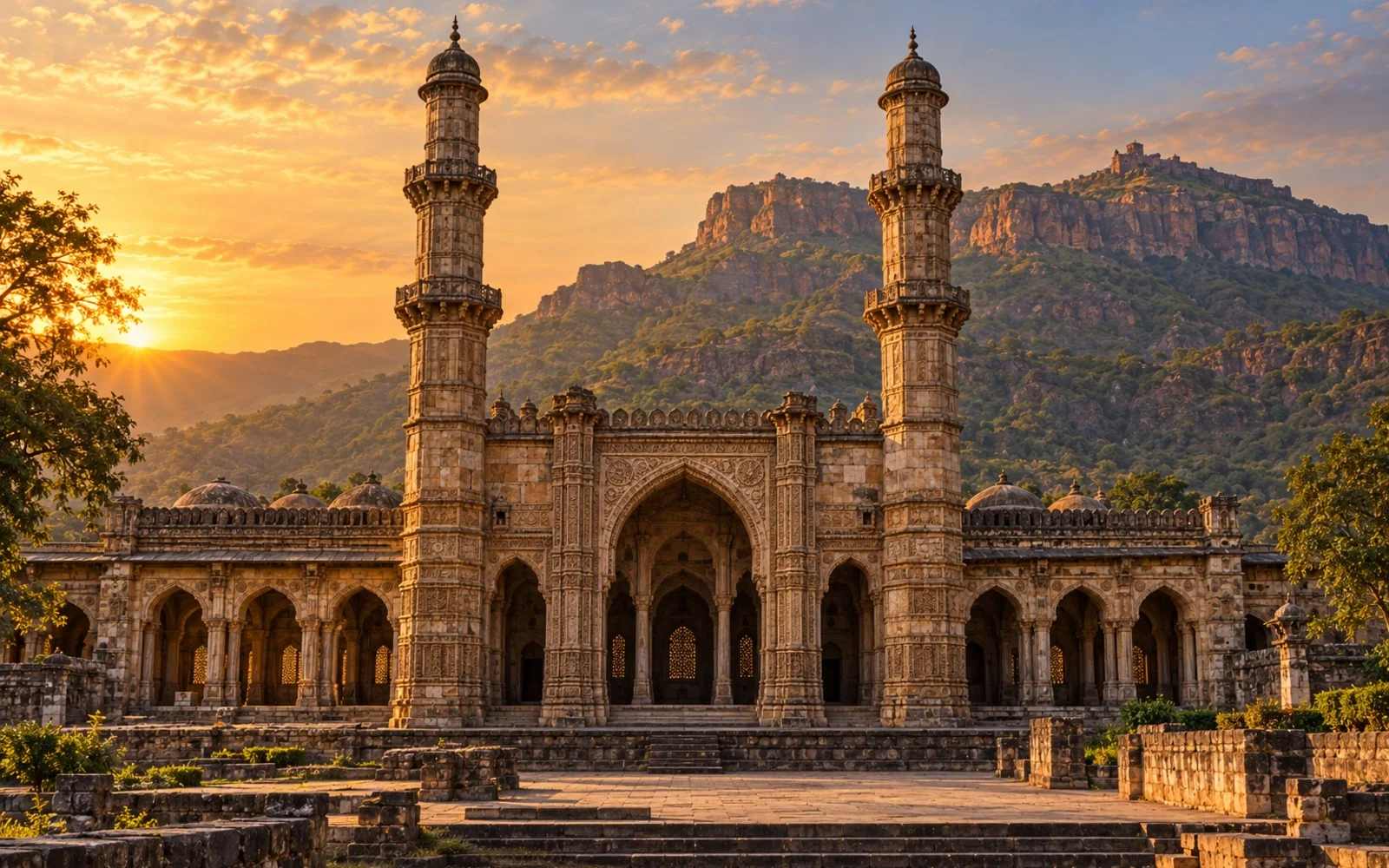
Champaner-Pavagadh, near Vadodara in Gujarat, combines a sacred hill and a Sultanate city. Pavagadh hill, crowned by the Kalika Mata temple, was held by Chauhan Rajputs until Sultan Mahmud Begada of Gujarat captured it in 1484 and built a new capital, Champaner, at its foot. Champaner had mosques, palaces, fortifications and water systems; the Jami Masjid (1513) is one of the finest mosques in western India. After the Mughal emperor Humayun took the city in 1535, it was largely abandoned. It became a UNESCO World Heritage Site in 2004.
Architecture & landscape
Its mosques blend Islamic plans with Gujarati carving traditions, with tall minarets and carved stone balconies.
Timeline
1484 CE
Captured by Mahmud Begada
1513 CE
Jami Masjid completed
1535 CE
Taken by Humayun
2004 CE
Inscribed as a UNESCO World Heritage Site