
How we knowDocumented through historical records, inscriptions and scholarship.
Why it matters
Ahmedabad shows how Hindu, Muslim and Jain communities shaped a single historic city.
History & context
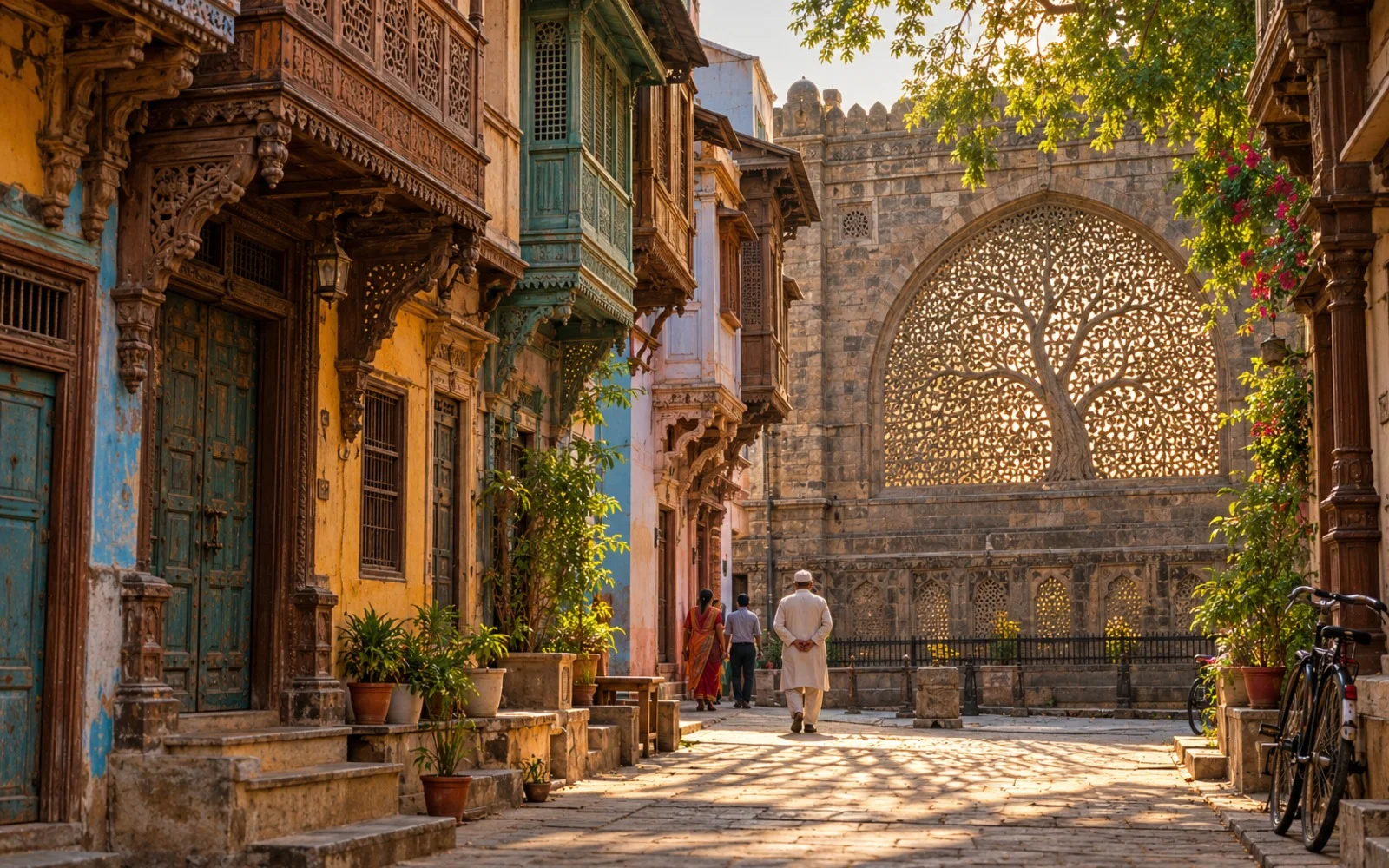
Ahmedabad was founded in 1411 by Sultan Ahmad Shah I on the east bank of the Sabarmati. Its walled city grew into a major trading centre with dense neighbourhoods called pols, each with gates, shrines and shared courtyards. The city's monuments include the Jama Masjid (1424), the Sidi Saiyyed mosque with its famous stone lattice window, and the Hutheesing Jain temple of 1848. In 2017 the historic city became India's first UNESCO World Heritage City. Ahmedabad was also the base of Mahatma Gandhi's Sabarmati Ashram.
Architecture & landscape
The pols have carved timber houses with courtyards, bird-feeders (chabutaras) and underground water tanks.
Timeline
1411 CE
City founded by Ahmad Shah I
1424 CE
Jama Masjid built
2017 CE
Inscribed as India's first World Heritage City