
Why it matters
Chittorgarh holds a central place in Rajput memory and in the history of Mewar.
History & context
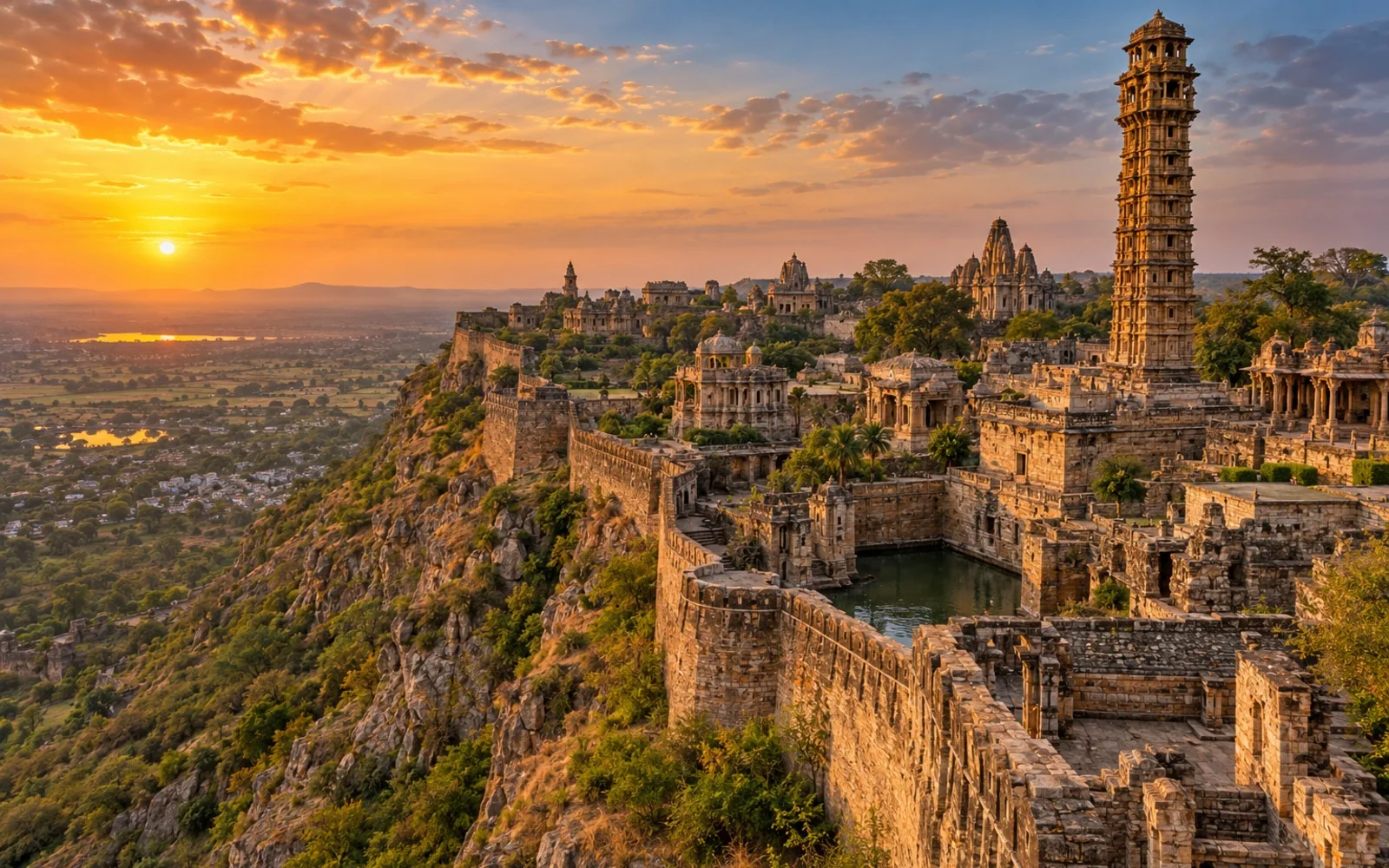
Chittorgarh, in southern Rajasthan, is one of the largest forts in India, spread across a plateau about 180 metres above the plain. Tradition dates its origins to the seventh century; it became the capital of Mewar under the Guhila and later Sisodia rulers. The fort is remembered for three great sieges — by Alauddin Khalji in 1303, by Bahadur Shah of Gujarat in 1535, and by Akbar in 1567–68 — each linked in Rajput tradition with acts of jauhar. The Vijay Stambh (Tower of Victory) was built by Rana Kumbha in the 1440s, and the older Jain Kirti Stambh dates to the twelfth century. The poet-saint Mirabai is associated with Chittor. After 1568 the Mewar capital moved to Udaipur. The fort is part of the UNESCO site "Hill Forts of Rajasthan".
Architecture & landscape
Inside the walls are palaces, temples, towers and many water bodies; about a fifth of the plateau was devoted to water storage.
Timeline
1303 CE
Siege by Alauddin Khalji
1440s
Vijay Stambh completed
1535 CE
Siege by Bahadur Shah of Gujarat
1568 CE
Captured by Akbar; capital moves to Udaipur
2013 CE
Inscribed by UNESCO as part of the Hill Forts of Rajasthan