
Why it matters
Jaipur is an outstanding example of a planned early modern Indian city and of courtly scientific patronage.
History & context
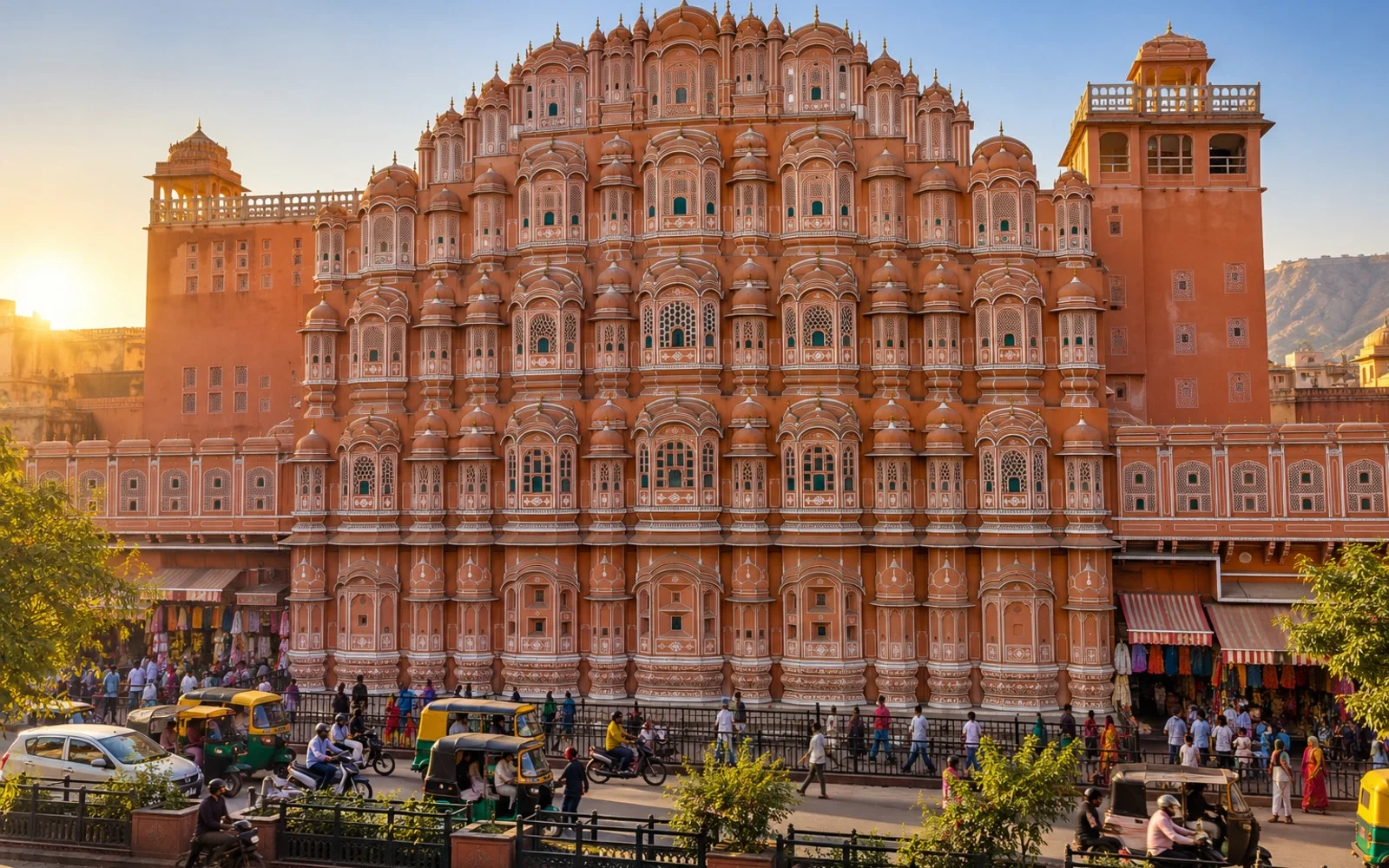
Jaipur was founded in 1727 by Sawai Jai Singh II of the Kachhwaha dynasty, who moved his capital down from Amber. The city was planned on a grid of wide streets and blocks, with designs attributed to Vidyadhar Bhattacharya. Jai Singh was deeply interested in astronomy, and his Jantar Mantar, finished in 1734, is the largest of the observatories he built; it became a UNESCO World Heritage Site in 2010. The City Palace, Hawa Mahal (1799) and bazaars line the old city. The walled city was painted pink for the Prince of Wales's visit in 1876, and was inscribed by UNESCO in 2019.
Architecture & landscape
The Jantar Mantar's masonry instruments include the Samrat Yantra, a giant sundial about 27 metres tall.
Timeline
1727 CE
City founded by Sawai Jai Singh II
1734 CE
Jantar Mantar completed
1799 CE
Hawa Mahal built
1876 CE
City painted pink
2019 CE
Walled city inscribed by UNESCO