
Why it matters
Gwalior combines a millennium of temple, palace and Jain art with a notable place in the history of mathematics.
History & context
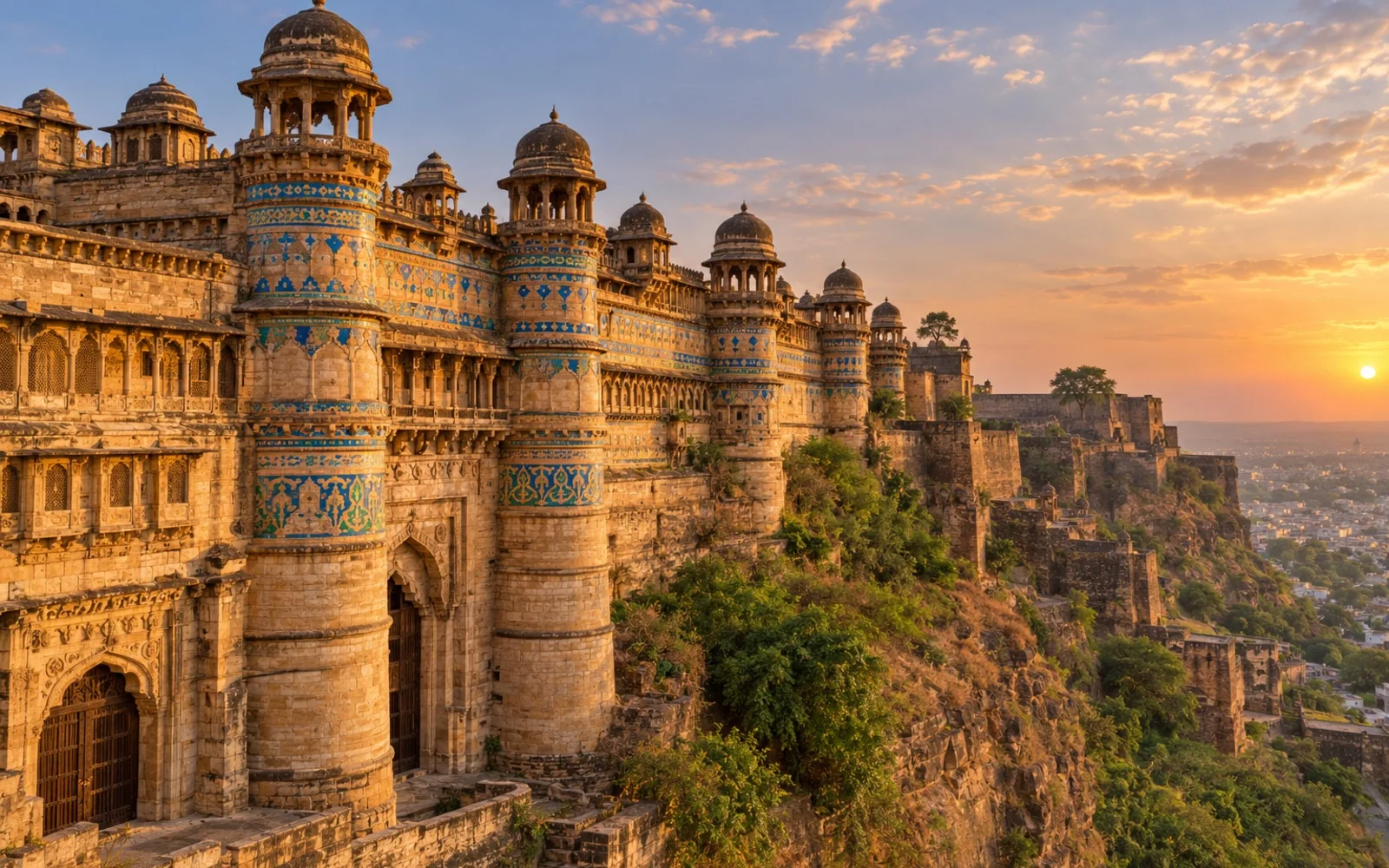
Gwalior Fort crowns a long sandstone hill in northern Madhya Pradesh and has been held by many dynasties. Its oldest standing temple, the Teli ka Mandir, dates to around the eighth or ninth century, and the Sas-Bahu temples were built in 1093 under the Kachchhapaghata rulers. The small Chaturbhuj temple carries an inscription dated 876 CE that is among the earliest known written uses of the numeral zero in India. Raja Man Singh Tomar built the Man Mandir palace between 1486 and 1516, decorated with blue, green and yellow tiles. Huge Jain images are carved into the cliffs. The fort later passed to the Mughals, Marathas (the Scindias) and the British.
Architecture & landscape
The Man Mandir's façade is covered in coloured glazed tiles showing ducks, elephants and banana trees.
Timeline
876 CE
Chaturbhuj temple inscription with a zero
1093 CE
Sas-Bahu temples built
1486–1516
Man Mandir palace begun