
How we knowSupported by material, archaeological or architectural evidence.
Why it matters
Lothal offers evidence of Harappan craft and trade, and its basin is central to debates about ancient maritime activity.
History & context
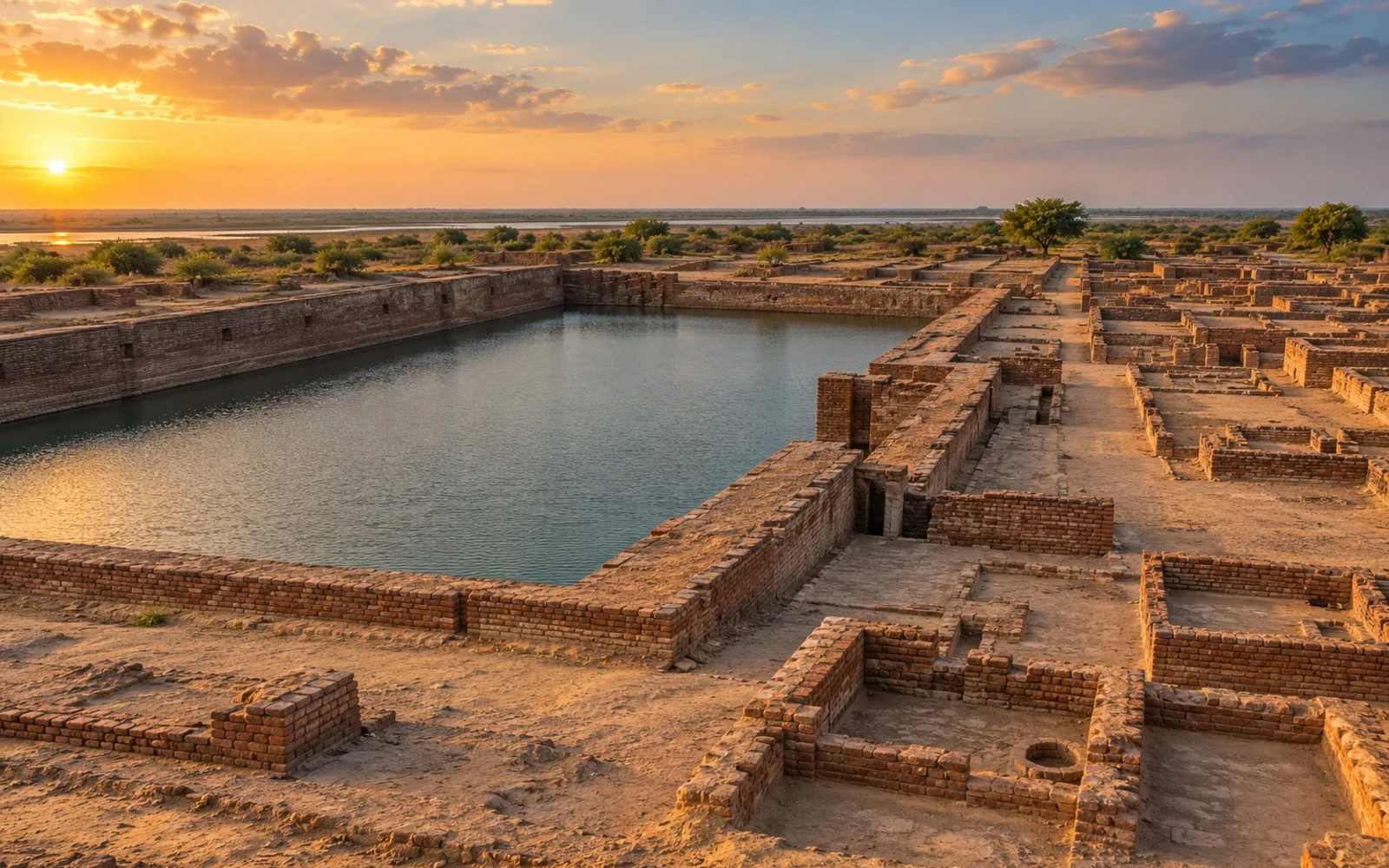
Lothal, near the Gulf of Khambhat in Gujarat, was a Harappan town occupied from around 2400 BCE. It was excavated by S. R. Rao between 1955 and 1960. It was a centre of craft production, especially of beads made from carnelian and other stones, and was linked by trade to other Harappan sites and possibly beyond. Its best-known feature is a large brick-lined basin, which the excavator interpreted as a dockyard; other scholars suggest it was a reservoir, and the question is still debated. A site museum displays finds.
Timeline
c. 2400 BCE
Settlement founded
1955–1960
Excavations begin