
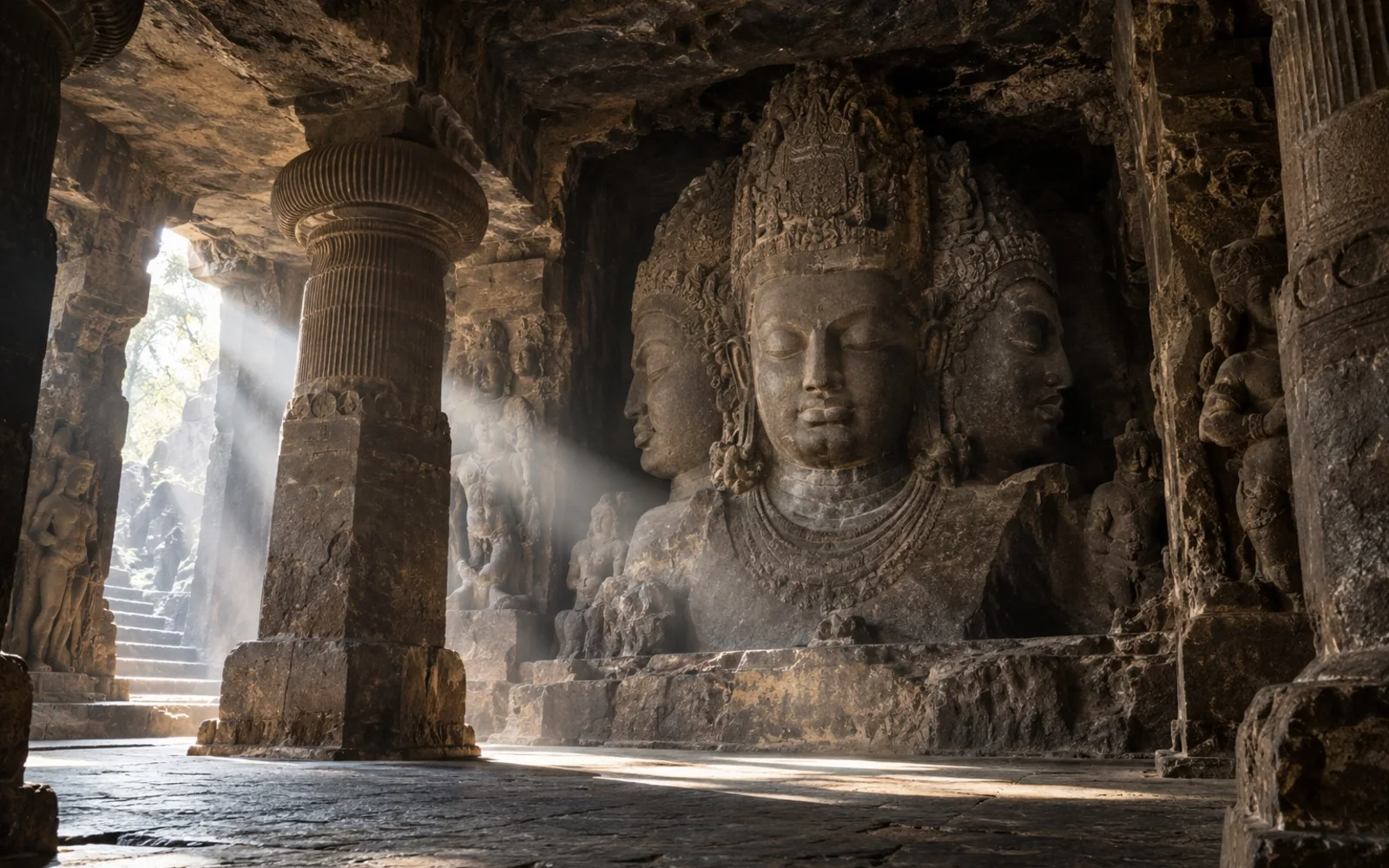
Why it matters
The Sadashiva and the surrounding panels are among the greatest works of Indian sculpture.
History & context
Elephanta Island (Gharapuri) lies in Mumbai Harbour. Its rock-cut caves, mostly dedicated to Shiva, date to around the fifth to eighth centuries; which dynasty sponsored them is still debated. The Portuguese named the island after a large stone elephant found there, now displayed in Mumbai. The main cave is a pillared hall with monumental sculpture panels showing Shiva in different forms. Its most famous image is the Sadashiva, a three-headed bust about six metres high. Elephanta became a UNESCO World Heritage Site in 1987.
Architecture & landscape
The main cave is a cross-shaped columned hall about 40 metres across, with a free-standing linga shrine and huge relief panels on the walls.
Timeline
c. 5th–8th century
Main cave carved
1987 CE
Inscribed as a UNESCO World Heritage Site