
Why it matters
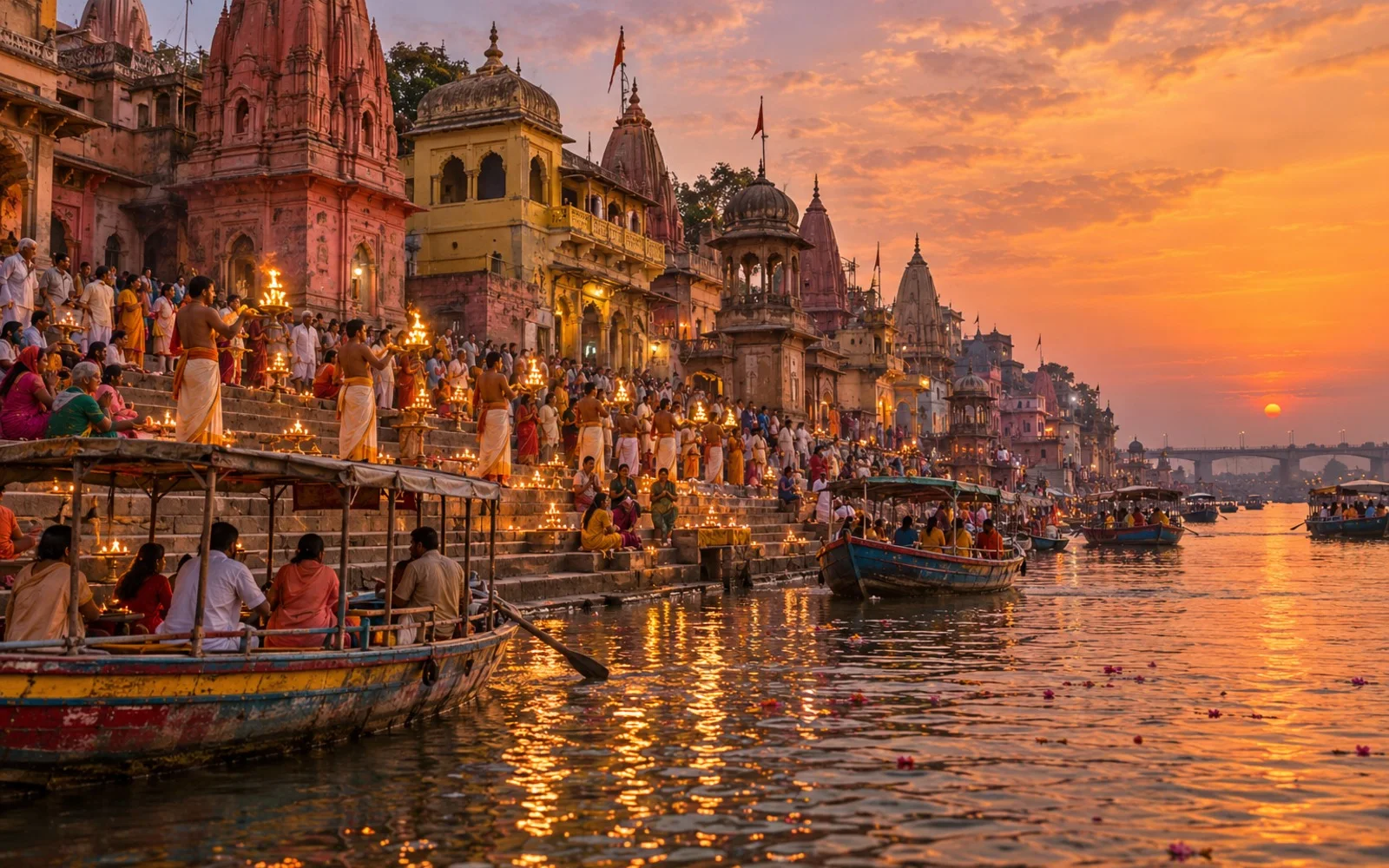
Mathura brings together a living Krishna tradition and a major chapter in the history of Indian sculpture, shared across Buddhist, Jain and Hindu communities.
History & context
Mathura, on the Yamuna, was the capital of the Shurasena mahajanapada and became one of the great cities of ancient north India. In Hindu tradition it is the birthplace of Krishna, and with nearby Vrindavan and Govardhan it forms the sacred landscape of Braj. Mathura is also a key site for the history of Indian art. Under the Kushanas, in roughly the first to third centuries CE, its workshops produced some of the earliest images of the Buddha, Jain tirthankaras and Hindu deities, carved in the region's distinctive spotted red sandstone. The Jain stupa site at Kankali Tila yielded many important sculptures. The city was raided by Mahmud of Ghazni in 1018. The Government Museum, founded in 1874, holds one of the finest collections of early Indian sculpture.
Timeline
c. 6th century BCE
Capital of the Shurasena mahajanapada
1st–3rd century CE
Kushan-period Mathura school of sculpture
1018 CE
Raided by Mahmud of Ghazni
1874 CE
Government Museum, Mathura founded